BreedForward Programme modernisation
by PlantNura

Make your breeding programme faster and more precise — and let the gain compound.

We study your programme end to end — the parents you choose, the crosses you make, how you advance, how you select, how you evaluate — and redesign it with methods and tools of our own. Less money and fewer plots per unit of gain, shorter cycles, better decisions. Then we train your team to run it.

What modernisation means

Five things change. Every one of them compounds.

A breeding programme is a chain of decisions, and each one sets the ceiling for the next. Improve five of them together and the gain does not add up — it multiplies, cycle after cycle. Five E’s, one programme.

  1. Effective

    More genetic gain per cycle from the germplasm you already have.

    Better parents, better crosses, better selections.
  2. Efficient

    Fewer plots, fewer crosses and less money per unit of gain.

    The same budget, spent where it moves the needle.
  3. Expedited

    Shorter cycles — earlier selection, rapid cycling, decisions made sooner.

    More rounds of selection in every decade.
  4. Exact

    Precise parents, precise crosses, precise evaluation and selection.

    Every decision made with precision.
  5. Enduring

    Diversity protected, variance sustained, and a team that runs it without us.

    Gain that keeps coming, and stays yours.

Gain that compounds.

Not five improvements added together — one programme multiplied, cycle after cycle.

Where we work

Five stages of a breeding programme. We optimise the three in the middle.

Demand — deciding what to breed for — and Dissemination — getting seed to farmers — are your mandate. Discovery, Design and Development are where a programme’s rate of gain is decided, and where BreedForward works.

01Demandyour mandate 05Disseminationyour mandate
02

Discovery

Which parents, genes and haplotypes?

What we optimise

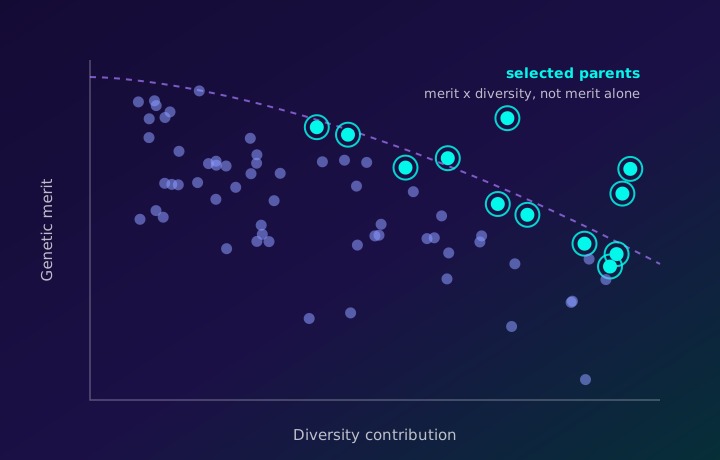
  • Parental selection that balances merit against diversity, not merit alone
  • The genetic base: what it holds, where the gaps are, what to bring in
  • The genes and haplotypes worth stacking, and a plan to stack and keep them
  • Targeted introgression without giving up elite performance

What changes

  • The next cycle starts from better parents than the last one finished with
  • Diversity is managed as an asset, not discovered as a problem
What we optimise

Six decisions that set your rate of gain.

Each one is worked on with a method of our own, and each one is simulated against what you do today before it is changed.

Candidate parents plotted by merit and diversity, the selected set ringed
Parents

Choose parents for the gain they will make, not the yield they had.

Merit and diversity weighed together, so the programme improves without narrowing.

  • Merit × diversity
  • Optimal contribution
  • Genetic base
  • Introgression
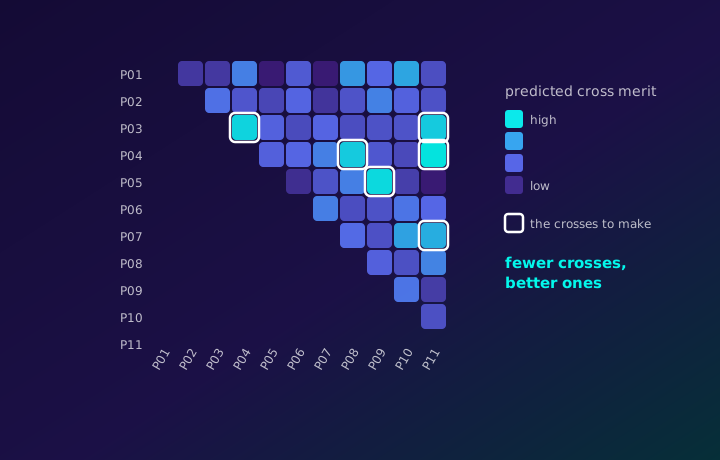
A crossing block shown as a matrix of predicted cross merit, the best pairs outlined
Crosses

Make fewer crosses, and better ones.

Our crossing-block optimiser scores every pair on merit, complementarity and diversity before the season starts.

  • Crossing-block optimiser
  • Pair merit
  • Haplotype complementarity
  • Diversity constraint
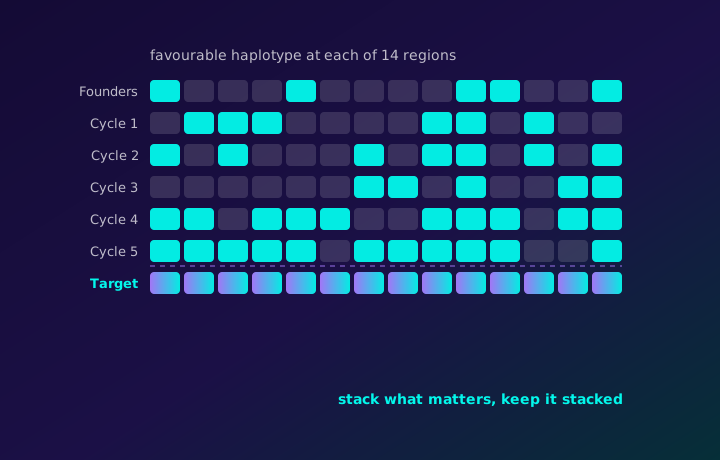
Favourable haplotypes accumulating across breeding cycles toward a target
Genes & haplotypes

Stack what matters, and keep it stacked.

Know which haplotypes carry the gain, track their frequency, and plan the stacking cycle by cycle.

  • Favourable haplotypes
  • Marker-assisted stacking
  • Haplotype frequency
  • Introgression plan
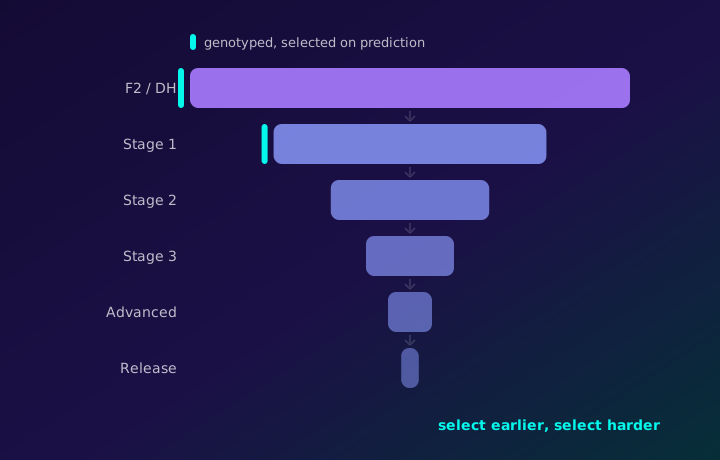
An advancement funnel from early generations to release, with genotyping marked at the early stages
Advancement & selection

Select earlier, select harder, select on the right thing.

Where genomic selection pays, where phenotyping still wins, and how many lines each stage should carry.

  • Genomic selection
  • Training population
  • Selection intensity
  • Early-generation testing
  • Cycle time
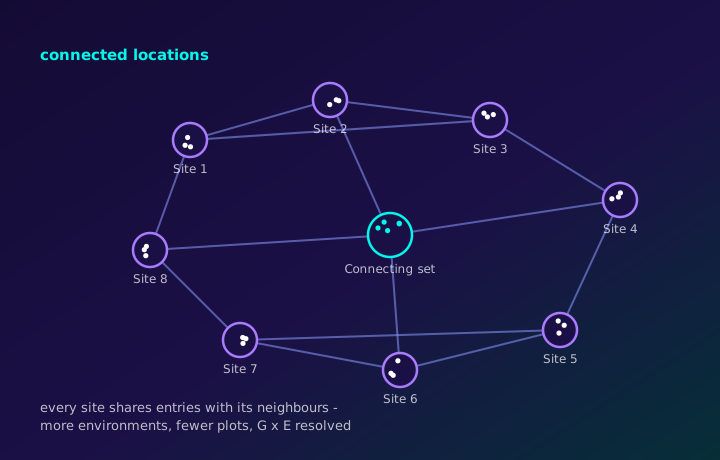
Trial sites drawn as a network, each sharing entries with its neighbours
Evaluation

Test in more environments with fewer plots.

Our connecting-locations design tests every line and links the sites through alleles, not repeated genotypes — so G×E is dissected instead of averaged away.

  • Connecting locations
  • Sparse MET
  • G×E
  • Stability
  • Advancement decisions
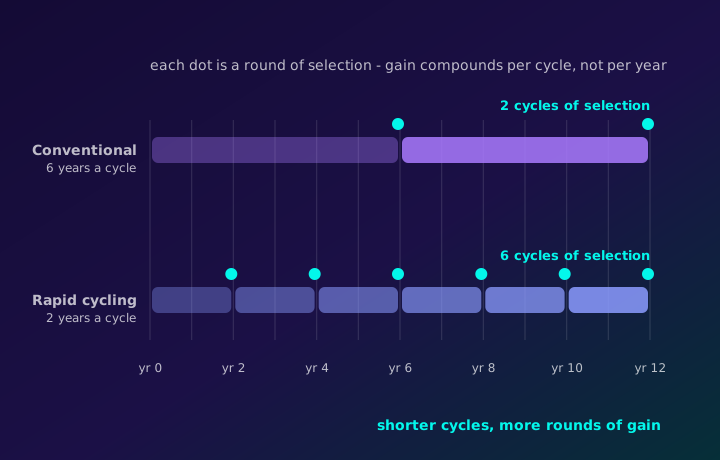
Two timelines over twelve years: a six-year cycle against a two-year one, with rounds of selection marked
Method & speed

The breeding method that fits the crop and the budget.

Gain compounds per cycle, not per year — so the length of the cycle is a decision, not a fact.

  • Pedigree
  • Bulk
  • Doubled haploid
  • Rapid cycling
  • Speed breeding
  • Genomic recurrent selection
Test before you invest

Every plan is simulated before you commit a plot.

Your programme is rebuilt in BreedPilot — population sizes, heritabilities, selection intensities, cycle length, budget — and the alternatives are run head to head. You see projected gain, cost and diversity for each strategy before anything changes in the field.

01

Gain per cycle, strategy by strategy

Phenotypic against genomic selection, your crossing plan against the optimised one, your cycle against a shorter one — projected over the cycles ahead, with the uncertainty shown.

02

Where the budget goes furthest

Plots, replicates, markers, sites, crosses: the same money allocated differently gives different gain. The simulation finds the allocation that gives the most.

03

How much diversity you keep

Short-term gain that empties the genetic base is not gain. Every strategy is scored on the diversity it leaves for the cycles after.

About BreedPilot

How an engagement runs

Six stages, from a conversation to a programme that runs itself.

The first review costs nothing. You go ahead only when the plan — and its projected gain — convinces you.

    Capability that stays

    We train your whole team. You decide who.

    Modernisation that depends on us is not modernisation. Every engagement includes training for the people you choose — breeders, field staff, data staff, management — so the programme keeps improving after we leave.

    Our promise

    When we leave, your team is fluent in quantitative genetics, data analysis and modern breeding — able to stand beside any programme in the world.

    • Parental selection & diversityChoosing parents on merit and diversity; managing the genetic base
    • Crossing design & breeding methodsCrossing blocks, mating designs, and which scheme fits which crop
    • Genomic selectionWhen it pays, where it does not, and how to run it inside your pipeline
    • Trial design & connecting locationsSparse multi-environment testing that connects sites through alleles, and how to read it
    • Data analysis & decisionsFrom field book to advancement decision, on your own data
    • The toolsBreedPilot, KropAnalytix and DataViz Pro, hands on

    See the Education programmes

    Who we help

    Private, public, or a network of both.

    The methods do not change. The constraints, the pace and the shape of the engagement do. Choose the one that fits you.

    Your programme stays yours

    Germplasm, data and strategy: confidential by default.

    A modernisation plan is a map of your competitive position. It is treated as one.

    We do not hold your data. You code the lines and the genotypes before anything is shared — we help you set that up — and only you hold the key. What we work on cannot be traced back to your germplasm without it.
    • Coded, not rawLine identities and genotypes are de-identified on your side before they reach us; the decoding stays with you.
    • Encrypted transfer and storageFiles move over an encrypted channel into storage only the people on your project can reach.
    • Nothing retained, nothing reusedYour germplasm information, trial data and results are never used for anyone else’s programme or to train anything, and are not kept when the engagement ends.
    • In writing if you need itEvery commitment on this page can be put into a signed agreement.
    Frequently asked

    The questions programmes ask first.

    What does the free programme review cover?

    You describe the programme — crop, cycle, budget, what frustrates you. We tell you where we think gain is being lost and whether we can help. No charge, no obligation.

    Which stages of the programme do you work on?

    Discovery, Design and Development — parents, genes and haplotypes; crosses and the breeding method; advancement, selection and evaluation. Demand (deciding what to breed for) and Dissemination (getting seed to farmers) stay your mandate; the plan is built to serve the product profile you set.

    What do we receive?

    A written modernisation plan for Discovery, Design and Development, each change simulated in BreedPilot against what you do today with projected gain and cost; hands-on support putting it into practice, at a pace agreed with you; and training for the team you choose.

    How do you decide which crosses to make?

    Every possible pair is scored — twenty parents give 190 — on the predicted mean and variance of its progeny, on how well the parents’ haplotypes complement each other, and on the diversity it keeps. You get the ten to twenty crosses worth making, not a list ranked on parent breeding values alone.

    What is connected breeding?

    Our approach to keeping gain going. Elite × elite recurrent selection is fast at first, but each cycle spends the additive variance it selects on, and the programme plateaus. Connected breeding brings quantitative variation into the elite pool through structured, connected crosses — variance that adds to what selection can work with rather than diluting performance — so gain continues cycle after cycle.

    Do we need genomic data to start — and where does genomic selection fit?

    You do not need markers to start: much of the gain in most programmes is in parents, crosses, advancement and trial design. Genomic selection is a placement decision — where in the pipeline predicting should replace phenotyping. Placed right it shortens the cycle, phenotypes only the training set and gains more per year; placed wrong it costs money for nothing. The plan says which, with the cost beside it.

    What is the connecting-locations design?

    PlantNura’s own sparse testing design, and different from sparse testing built on a single genomic relationship matrix. Every line is tested — 2,000 lines across five environments means all 2,000 go into the field, spread across the five — and the environments are connected through alleles, not through repeating the same genotypes at every site. The connections are built from relationship matrices derived iteratively (the algorithm is ours and stays confidential). The result: more environments, far fewer plots, G×E estimated rather than averaged away, and more power from the same budget.

    Does the plan work for our crop?

    The quantitative framework is crop-agnostic — cereals, legumes, oilseeds, vegetables, forages, clonal crops — and the plan is built around your crop’s biology: its reproduction, its cycle length, its testing constraints.

    Which tools do you use?

    Our own. BreedPilot simulates the programme and supports the breeding decisions; KropAnalytix runs the analysis; DataViz Pro produces the figures. Nothing is rented, and you are not asked to buy a licence to work with us.

    Who gets trained?

    Whoever you decide — breeders, field and data staff, management. Training covers what was changed and why, from parental selection and crossing through genomic selection, trial design and data analysis, on your own programme’s data and with our tools in hand.

    How long does an engagement take?

    That depends on the programme and the scope you choose, and it is something we discuss and agree with you at the start — from a focused few weeks of set-up and training to longer-running support. Nothing begins before the scope is agreed.

    When do we pay?

    The first review is free. The study and plan are quoted before they start, and you commit to implementation only once the plan and its projected gain are in front of you.

    Is our germplasm information and data safe with you?

    Yes — because we do not hold it. We work on coded data: you de-identify the lines and the genotypes before anything is shared (we help you set that up if you need it), and only you hold the key. Transfer and storage are encrypted, nothing is pooled with any other programme or used to train anything, and nothing is retained when the engagement ends. NDA on request; any of this can go into a signed agreement.

    Do you work with programmes outside India?

    Yes. We work remotely, or we come and join you at your office — whichever suits the programme — and we are there at the times agreed with you. The study, the plan, the simulation and the training all run either way.

    Can we start with one part of the programme?

    Yes. A crossing block, a trial network or a genomic-selection decision can each be a first engagement. The review will tell you which part would pay back first.

    Find out where your programme is losing gain.

    One conversation about your crop, your cycle and your constraints. If we can help, you will know where and by how much before you spend anything.

    Book a free programme review